
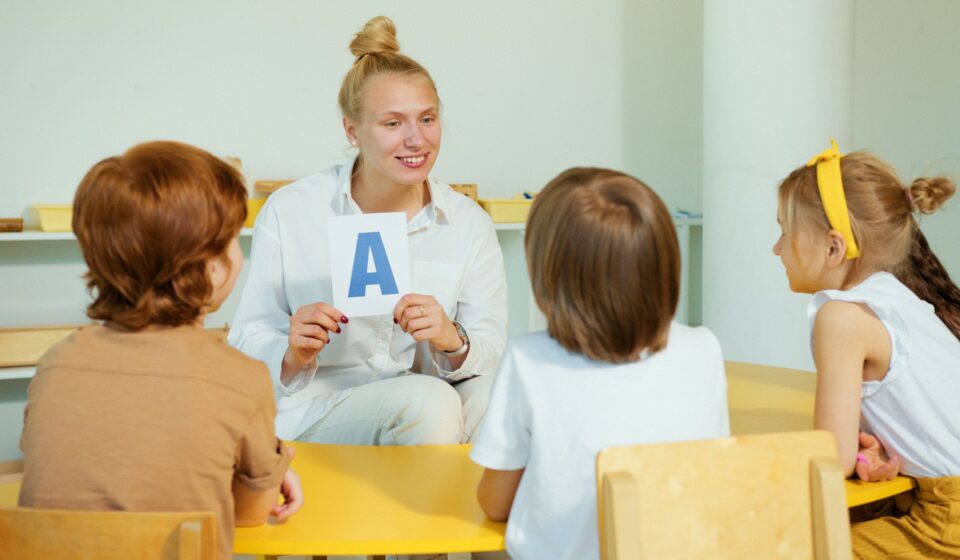
Language acquisition is the remarkable, innate process through which humans gain the capacity to perceive, comprehend, and produce language. It’s how we move from being newborns with the potential for speech to fluent communicators. This doesn’t just mean learning vocabulary; it encompasses understanding grammar, intonation, and the social nuances of communication. As of September 2026, research continues to illuminate the intricate interplay of biological predispositions and environmental influences that shape this fundamental human ability.
Last updated: September 17, 2026
While often associated with children learning their native tongue, the principles of language acquisition also apply to learning subsequent languages, albeit with different nuances. Understanding this process is crucial for educators, parents, and anyone interested in human cognitive development.
Key Takeaways
- Language acquisition is the natural, largely unconscious process of learning a language, primarily in childhood.
- It involves understanding sounds, words, grammar, and social communication rules.
- Major theories suggest innate abilities, cognitive development, and social interaction all play critical roles.
- Stages of acquisition, from babbling to complex sentences, are generally consistent across cultures.
- Factors like environment, exposure, and individual differences influence the pace and success of acquisition.
Latest Update (September 2026)
Recent educational initiatives highlight the growing emphasis on multilingualism. For instance, Visalia Unified has expanded its dual language immersion program to a third elementary school as of September 2026, demonstrating a commitment to early language learning. This expansion reflects a broader trend in education that recognizes the cognitive benefits of bilingualism. According to ABC30 Fresno, these programs aim to equip students with fluency in two languages from a young age.
Conversely, concerns are being raised about policy impacts on English language learners. As ProPublica reported in September 2026, Arizona’s decision to lower the bar for its English fluency test is expected by experts to harm students in the long run. This situation underscores the complex challenges in supporting multilingual learners and ensuring equitable educational outcomes.
Major Theories Shaping Our Understanding
The question of how we acquire language has puzzled thinkers for centuries, leading to several influential theories. These provide different lenses through which to view this complex process, highlighting either innate predispositions or the power of our environment.
The Behaviorist theory, championed by B.F. Skinner, posits that language is learned through imitation, reinforcement, and conditioning. A child might babble, and if a parent responds positively (reinforcement), the child is more likely to repeat that sound. While this explains some aspects of language learning, it falls short of explaining the rapid, creative, and rule-governed nature of language acquisition, particularly the ability to produce novel sentences.
Noam Chomsky’s Innateness Hypothesis, conversely, suggests humans are born with a Language Acquisition Device (LAD), a hypothetical neurological structure enabling us to understand and produce language. This LAD contains a universal grammar, a set of abstract principles common to all human languages. Children are thus predisposed to learn language; they don’t simply imitate but actively construct grammatical rules based on the input they receive. This theory helps explain why children can produce grammatically correct sentences they’ve never heard before.
From a cognitive perspective, theorists like Jean Piaget argued that language acquisition is part of broader cognitive development. Children first develop concepts (like object permanence) and then attach words to them. Language is seen as a reflection of a child’s current stage of cognitive understanding. This view suggests that without the cognitive capacity to grasp a concept, a child can’t acquire the language to express it.
Social Interactionism, proposed by theorists like Jerome Bruner, bridges the gap between behaviorism and innatism. Bruner introduced the concept of the Language Acquisition Support System (LASS), which highlights the crucial role of social interaction. Adults often adapt their speech (motherese or parentese) and provide scaffolding – simplified language, questions, and feedback – to help children learn. This theory emphasises that while innate abilities exist, social engagement is vital for language development.
The Predictable Path: Stages of Acquisition
Regardless of the specific theory one subscribes to, the journey of language acquisition generally follows a predictable sequence of developmental stages. These milestones provide a useful framework for understanding a child’s progress. While the timing can vary, the order is remarkably consistent across different cultures and languages.
Pre-linguistic Stage (0-12 months)
This stage begins with crying, followed by cooing (vowel-like sounds) and babbling (vowel-consonant combinations). By 9–12 months, babies start to understand common words and their own names, and their babbling begins to take on the intonation patterns of their native language.
Holophrastic Stage (12-18 months)
Children begin to utter their first words, which often represent entire phrases or ideas. For example, ‘ball’ might mean ‘I want the ball’ or ‘that’s a ball.’ Vocabulary grows slowly at this stage, typically to around 50 words as of 2026.
Two-Word Stage (18-24 months)
Vocabulary expands rapidly, and children start combining two words into simple phrases, such as ‘more juice’ or ‘daddy go.’ These are telegraphic utterances, conveying essential meaning.
Early Multi-word Stage (2-3 years)
Sentences grow longer, typically 3–4 words. Children begin to use grammatical morphemes like ‘-ing’ and plural ‘-s,’ though often with errors (overgeneralization, e.g., ‘goed’ for ‘went’). They start asking questions and using pronouns.
Later Multi-word Stage (3-5 years)
Grammatical structures become more complex. Children can hold conversations, tell simple stories, and understand more complex sentences. They master most basic grammatical rules, though occasional errors persist.
Factors Influencing Language Acquisition
While the stages are predictable, the speed and effectiveness of language acquisition are influenced by a variety of factors. Understanding these can help optimize the learning environment for children, whether it’s their first or a subsequent language.
Exposure and Input Quality
This is perhaps the most critical factor. Children need consistent, rich, and varied language input. The quantity of words spoken to a child is important, but the quality – the complexity, variety, and responsiveness of the language – plays an equally significant role.
For example, researchers observe that children exposed to a wider vocabulary and more complex sentence structures tend to develop more advanced language skills. This is why reading aloud, engaging in dialogue, and using descriptive language are highly recommended by experts. As NASA Science (.gov) recently highlighted in strategies for working with multilingual learners, providing diverse and comprehensible input is fundamental for educational success.
Social Interaction and Environment
Beyond mere exposure, the social context in which language is learned is paramount. Responsive interactions, where adults pay attention to a child’s utterances and respond meaningfully, foster language development. This interactive loop, often termed ‘serve and return,’ is vital. Children learn to use language to express needs, build relationships, and understand the world around them.
The home environment, caregiver interactions, and peer relationships all contribute. A stimulating environment that encourages communication and exploration supports more robust language acquisition. Conversely, environments with limited verbal interaction or high stress can impede development.
Cognitive and Biological Factors
Innate biological mechanisms play a foundational role, as suggested by Chomsky’s LAD theory. The human brain is uniquely wired for language. However, cognitive development also underpins language acquisition. As children develop memory, attention, and problem-solving skills, their capacity for understanding and using language grows.
For instance, a child’s ability to understand that an object still exists even when out of sight (object permanence) is a cognitive milestone that correlates with the ability to use words to refer to those objects. Individual differences in cognitive processing speed and capacity can also influence how quickly a child acquires language.
Individual Differences and Learning Styles
Not all children acquire language at the same pace or in the same way. Factors such as temperament, motivation, and individual learning styles contribute to variations. Some children are naturally more outgoing and may experiment with language more readily, while others may be more reserved.
Understanding these individual differences is important for tailoring support. What works for one child might not work for another. Recognizing and valuing a child’s unique approach to learning can enhance the acquisition process.
Language Acquisition vs. Language Learning
It’s important to distinguish between language acquisition and language learning. Acquisition is the natural, subconscious process of internalizing a language, primarily the native tongue during childhood. It happens through exposure and use, similar to how children learn to walk.
Language learning, on the other hand, is a conscious process, typically involving formal instruction, grammar rules, and vocabulary drills. This is more akin to how individuals learn a second language in a classroom setting as adults. While both lead to language proficiency, acquisition is generally seen as more intuitive and deeply integrated.
The Role of Bilingualism in Language Acquisition
Bilingualism, the ability to speak two languages, is increasingly common and recognized for its cognitive advantages. Children who grow up exposed to multiple languages often acquire them simultaneously through natural acquisition processes. Research as of 2026 indicates that early bilingualism can enhance cognitive flexibility, problem-solving skills, and even delay the onset of cognitive decline later in life.
Educational institutions are increasingly adopting programs to support this. The expansion of dual language immersion programs, such as the one noted in Visalia Unified by ABC30 Fresno, reflects a growing understanding of the benefits of early and sustained exposure to multiple languages.
Challenges in Language Acquisition
Despite the innate capacity, language acquisition is not always smooth. Various challenges can arise. Language delays, learning disabilities like dyslexia, and environmental factors can impede progress. For instance, children experiencing hearing impairments or those in under-resourced environments may face significant hurdles.
Furthermore, the acquisition of a second language later in life often involves more conscious learning and can be influenced by factors like age, motivation, and the similarity between the native and target languages. As reported by ProPublica regarding Arizona’s English fluency tests, policy decisions can also inadvertently create barriers for learners.
Supporting Language Acquisition
Effective support for language acquisition involves creating an environment rich in language and interaction. For young children, this means engaging in frequent conversations, reading books, singing songs, and responding to their attempts at communication. For older learners or those learning a second language, consistent practice, immersion opportunities, and patient guidance are key.
Educators and parents can utilize various resources and strategies. According to NASA Science (.gov), providing varied and comprehensible input, coupled with opportunities for meaningful use of language, is essential for multilingual learners. This includes adapting teaching methods to suit different learning styles and ensuring a supportive, low-anxiety atmosphere.
Frequently Asked Questions
What is the difference between language acquisition and language learning?
Language acquisition is the natural, subconscious process of internalizing a language through exposure and use, typically in childhood. Language learning is a conscious, deliberate process involving formal study of grammar and vocabulary, often in adulthood.
Is language acquisition purely innate, or is it learned?
Research strongly suggests a combination of both. Humans are born with an innate capacity for language (innatism), but environmental input and social interaction are crucial for shaping the specific language acquired.
How does social interaction help language acquisition?
Social interaction provides essential input and feedback. Adults often adapt their speech and provide scaffolding, creating a supportive environment that encourages children to practice and refine their language skills through meaningful communication.
Can adults acquire a new language as easily as children?
Generally, children have a greater capacity for natural, subconscious language acquisition. Adults often rely more on conscious learning strategies, and factors like motivation and exposure levels play a significant role in their success.
What are the stages of language acquisition?
The typical stages include pre-linguistic (babbling), holophrastic (one-word utterances), two-word stage, early multi-word stage, and later multi-word stage, marked by increasing sentence complexity and grammatical accuracy.
Conclusion
Language acquisition is a profound and complex human capability, a blend of innate biological wiring and rich environmental interaction. From the first cries of an infant to the nuanced conversations of adults, this process shapes our ability to connect, understand, and participate in the world. Understanding the theories, stages, and influencing factors provides valuable insights for supporting language development at all levels, from native tongue acquisition to the learning of new languages.