
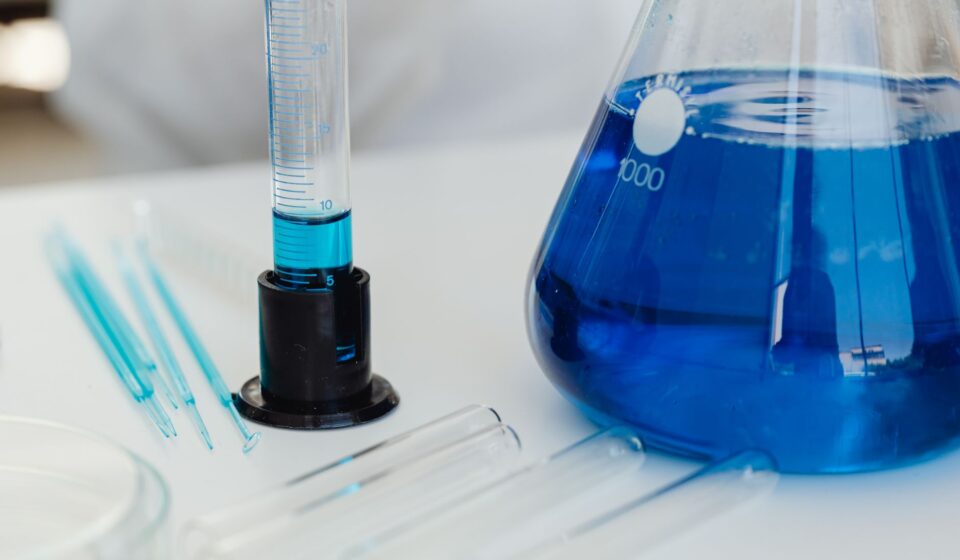
Demystifying the Science Experiment: From Idea to Insight
Embarking on a science experiment is a fundamental way to explore the world, test ideas, and understand phenomena. Whether you’re a student preparing for a science fair, a teacher looking for engaging classroom activities, or simply a curious individual, knowing how to science experiment effectively is key to uncovering reliable results.
Last updated: July 29, 2026
Latest Update (July 2026)
As of July 2026, advancements in artificial intelligence are increasingly impacting scientific research. Rice University recently received nearly $20 million from the National Science Foundation to establish an AI-powered materials laboratory, accelerating discovery in that field. Similarly, AI’s potential and practical limitations are being closely examined in drug discovery, as reported by Drug Target Review. These developments highlight a growing trend towards integrating sophisticated computational tools into experimental design and analysis, even for traditional scientific inquiry.
Furthermore, educational initiatives continue to evolve. Loyola Marymount University, among others, regularly announces grants and awards supporting scientific endeavors. In India, the Deccan Chronicle reported that Genie Science Kits were distributed to 100 schools, underscoring ongoing efforts to promote hands-on science education. As of 2026, the emphasis remains on rigorous methodology, ensuring that every experiment, no matter how simple, adheres to best practices.
Key Takeaways
- Clearly define your question and form a testable hypothesis.
- Identify and control variables to isolate the effect you’re testing.
- Follow a structured procedure, documenting every step and observation.
- Analyze your data rigorously to draw accurate conclusions.
- Communicate your findings clearly, acknowledging limitations.
Formulating a Clear Question and Hypothesis
The journey of any science experiment begins with curiosity. It’s crucial to transform that curiosity into a specific, testable question. Instead of asking, “Does plant food work?” a better question might be, “Does Brand X plant food increase the height of bean sprouts compared to plain water?” This specificity is vital for designing a focused experiment.
Once your question is set, you’ll formulate a hypothesis. This is an educated guess or prediction about the outcome of your experiment. It should be stated in a way that can be proven or disproven. For instance, “If bean sprouts are given Brand X plant food, then they will grow taller than bean sprouts given only water.” According to the National Science Teaching Association (NSTA) as of 2026, a well-formed hypothesis is a cornerstone of scientific inquiry for students.
Designing the Experiment: Variables and Controls
This is where you plan how to answer your question. You need to identify your variables: the independent variable (what you change), the dependent variable (what you measure), and the controlled variables (what you keep the same).
In our plant food example, the independent variable is the type of liquid given to the plants (Brand X food vs. Water). The dependent variable is the height of the bean sprouts, measured in centimeters.
Controlled variables are critical for ensuring a fair test. These would include the amount of light, the type of soil, the pot size, the ambient temperature, and the initial size of the sprouts. Keeping these consistent ensures that any observed difference in growth is likely due to the plant food, not other factors. Neglecting controlled variables is one of the most common reasons science experiments yield unreliable data.
For example, if one plant receives more sunlight than another, its taller growth might be attributed to the extra light, not the plant food. Ensuring all conditions are identical except for the independent variable is paramount. This principle applies universally, from simple classroom projects to complex laboratory research.
Gathering Materials and Setting Up
With your design in place, you’ll list all the necessary materials. This includes everything from the plant food and water to the pots, soil, measuring tools (like a ruler or graduated cylinder), and any safety equipment required.
For simple home experiments, using common household items is often sufficient, as highlighted by resources like Science Fun.org. Accuracy in setup is paramount; a misplaced label or an uneven distribution of soil can introduce errors.
Setting up involves arranging your materials according to your experimental design. This might mean preparing the soil, planting the seeds, labelling the pots clearly with which treatment they will receive (e.g., “Food” and “Water”), and placing them in an area where controlled variables like light and temperature are consistent. Clear labeling prevents confusion during the experiment and ensures accurate data collection.
Conducting the Experiment and Recording Data
This is the ‘doing’ phase. You will systematically carry out the steps outlined in your procedure. For our plant experiment, this means watering the designated plants with their respective liquids at regular intervals.
Crucially, you must record your observations meticulously. This involves measuring the dependent variable at predetermined times. For instance, you might measure the height of each sprout every two days.
Use a notebook or a data table to log these measurements, along with any qualitative observations (e.g., leaf color, stem thickness). According to a 2026 review by Education Week, consistent, accurate data recording is a skill that benefits all levels of scientific study.
A potential pitfall here is ‘observer bias’ – subconsciously seeing what you expect to see. To counter this, use objective measurements and, if possible, have someone else check your measurements or data recording. For complex experiments, using digital sensors can further enhance objectivity.
Analyzing Your Data
Once the experiment is complete and all data is collected, it’s time to make sense of it. Look for patterns and trends in your measurements. Does the data show a clear difference between the groups?
For quantitative data (numbers), you might calculate averages, create graphs (like a bar chart or line graph), or perform simple statistical tests. A bar chart comparing the average final height of sprouts in the “Food” group versus the “Water” group would be very effective.
From a different angle, the analysis phase is where you determine if your hypothesis was supported or refuted. If the bean sprouts watered with Brand X food consistently grew taller, your hypothesis is supported. If there was no significant difference, or if the watered sprouts grew taller, your hypothesis is refuted. Both outcomes are valuable scientific discoveries.
Modern data analysis tools, some incorporating AI, can help identify subtle correlations that might be missed with manual methods. These tools can also help visualize complex datasets, making patterns more apparent. Resources like Khan Academy offer free modules on data analysis relevant to science experiments.
Drawing Conclusions and Communicating Results
Your conclusion should summarize your findings in relation to your original question and hypothesis. State clearly whether your hypothesis was supported or not, and explain why, referencing your analyzed data.
It’s important to acknowledge any limitations of your experiment. Perhaps the sample size was small, or environmental conditions were not perfectly controlled. Honesty about limitations strengthens your scientific credibility.
Communicating your results effectively is the final step. This could be through a written report, a presentation, or a poster. Tailor your communication to your audience. For a science fair, visual aids are key; for a scientific journal, detailed methodology and statistical analysis are essential.
The debate around animal testing, its pros, cons, and ethical considerations, continues to inform discussions on experimental methodology in fields like medicine and disease research, as noted by britannica.com. While not directly applicable to a simple plant experiment, it highlights the broader ethical considerations that underpin all scientific inquiry in 2026.
Frequently Asked Questions
What is the most important part of a science experiment?
The most critical element is a clearly defined, testable question and a well-formulated hypothesis. Without these, the experiment lacks direction and purpose, making it difficult to draw meaningful conclusions.
How do I ensure my experiment is fair?
Ensure fairness by identifying and controlling all variables except the independent variable. This means keeping everything else the same for all experimental groups. For example, use the same type of soil, pot, and light conditions for all plants.
What if my hypothesis is wrong?
A refuted hypothesis is still a valuable scientific outcome. It means you’ve learned something new about the phenomenon you’re studying. Revise your hypothesis based on the new data and consider designing a follow-up experiment.
How much data do I need?
The amount of data needed depends on the experiment’s complexity and variability. For most student projects, repeating the experiment multiple times (e.g., using several plants per group) and collecting data over a sufficient period is recommended.
Can AI help with my science experiment?
Yes, AI is increasingly used for data analysis, identifying patterns, and even suggesting experimental designs. Tools are becoming more accessible, potentially aiding researchers and students in various scientific fields.
Conclusion
Mastering the art of the science experiment is an ongoing process of learning and refinement. By diligently defining your question, controlling variables, meticulously recording data, and thoughtfully analyzing results, you can move from initial curiosity to genuine scientific insight. The principles remain constant, even as tools and technologies, such as AI-powered laboratories, evolve. Embrace the process, learn from every outcome, and continue exploring the world around you with scientific rigor in 2026 and beyond.