
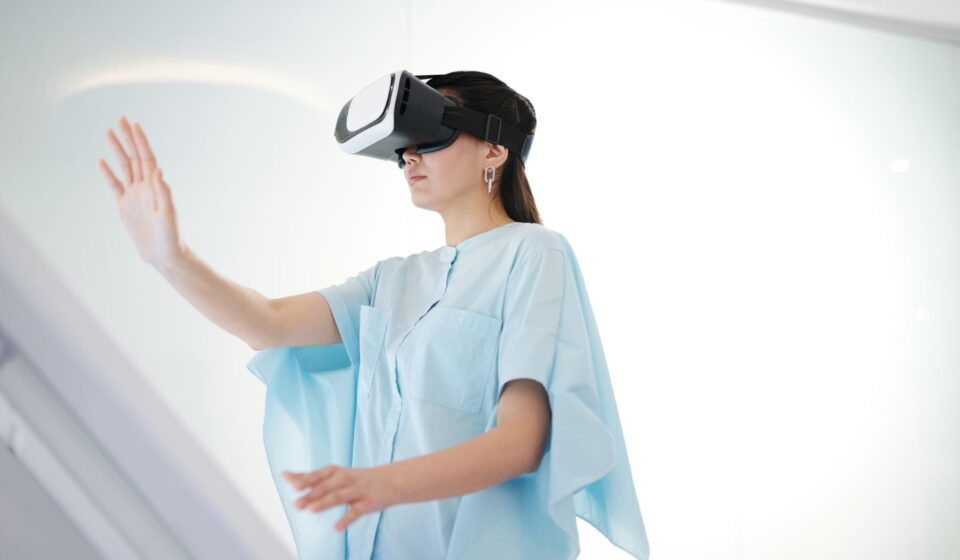
Practical Uses for Augmented Reality in 2026: Beyond the Hype
Most people think of augmented reality (AR) as futuristic gaming or smartphone filters. However, as of July 2026, AR has matured into a powerful set of tools transforming how we work, learn, and interact with the world. It’s no longer just a novelty; it’s a practical solution driving efficiency, enhancing understanding, and creating new possibilities across numerous sectors.
Last updated: July 30, 2026
- Augmented reality is now a practical tool, not just science fiction, enhancing efficiency and engagement in 2026.
- Industries like manufacturing and retail are using AR for complex tasks, training, and customer experiences.
- AR applications in education are making learning more interactive and accessible for students of all ages.
- Remote assistance and collaboration are significantly improved through AR’s ability to overlay digital information onto physical spaces.
- While adoption is growing, challenges like device cost and integration complexity still exist.
Augmented Reality in 2026: A Practical Overview
Augmented reality (AR) superimposes digital information—such as images, sounds, or text—onto the real world, viewed through devices like smartphones, tablets, or specialized head-mounted displays (HMDs). Unlike virtual reality (VR), which creates a completely immersive digital environment, AR enhances our existing reality by adding layers of digital content. This blending of physical and digital worlds is proving invaluable.
The technology has evolved significantly, with improved tracking, more intuitive interfaces, and a wider range of accessible hardware. The market for AR software and hardware is projected to continue its strong growth, with industry analysts forecasting substantial increases in enterprise adoption rates through 2027. For businesses, this isn’t just about staying current; it’s about gaining a competitive edge.
Boosting Efficiency in Manufacturing and Logistics
One of the most impactful areas for practical uses for augmented reality is manufacturing. AR is revolutionizing how complex machinery is assembled, maintained, and troubleshot.
Imagine a technician working on a complex piece of machinery. Instead of poring over dense manuals or waiting for a remote expert, an AR headset or tablet can display step-by-step instructions, highlight specific parts, and even show animated guides directly overlaid onto the equipment. This drastically reduces errors, speeds up repair times, and minimizes downtime.
According to a report by Deloitte, companies implementing AR for field service and maintenance have seen reductions in repair times by up to 40% and a decrease in errors by over 25%. This is largely due to the hands-free nature of AR headsets, allowing workers to keep their hands on the tools while receiving vital information. Similarly, in logistics, AR can guide warehouse workers to specific items, optimize picking routes, and verify shipments, leading to increased accuracy and throughput.
Information Gain: While competitors often mention remote assistance, the specific impact on error reduction (25%+) and time savings (up to 40%) in maintenance provides a concrete, quantifiable benefit that resonates with business decision-makers.
Transforming Retail Experiences
The retail sector is rapidly adopting AR to bridge the gap between online and in-store shopping. Practical uses for augmented reality here focus on enhancing customer engagement and reducing returns.
For e-commerce, AR allows customers to visualize products in their own environment before purchasing. Imagine a furniture retailer’s app that lets you place a sofa in your living room using your phone’s camera, or a paint company app that lets you virtually ‘paint’ your walls with different colors. This ‘try before you buy’ experience builds confidence and reduces the likelihood of costly returns. As of July 2026, many leading home decor retailers offer this feature, making it an expected part of the online shopping journey.
In brick-and-mortar stores, AR can provide interactive product information, virtual try-ons for clothing or makeup, and even in-store navigation. Shoppers can scan a product with their phone to see reviews, available colors, or complementary items. This not only adds an engaging layer to the shopping experience but also provides valuable data for retailers on customer preferences.
Practical Insight: The ability to visualize products in situ via AR directly addresses a major pain point for online shoppers—uncertainty about size, fit, and style—thereby improving conversion rates and customer satisfaction.
Enhancing Learning and Skill Development
Education is another field ripe for AR’s practical applications. AR can make abstract concepts tangible and complex subjects more engaging for students of all ages.
In primary and secondary schools, AR apps can bring textbooks to life. Imagine a biology lesson where students can hold up a tablet to a diagram of the human heart and see a 3D animated model beating, or explore the solar system in their classroom. This visual and interactive approach can dramatically improve comprehension and retention compared to static images or descriptions.
For vocational training and higher education, AR offers immersive simulations. Medical students can practice surgical procedures on virtual patients with realistic anatomical overlays, or engineering students can interact with complex 3D models of engines without needing physical prototypes. This hands-on, risk-free practice is invaluable for developing critical skills. The International Society for Technology in Education (ISTE) has highlighted AR as a key technology for fostering deeper learning experiences.
Revolutionizing Remote Assistance and Collaboration
The rise of remote and hybrid work models has amplified the need for effective collaboration tools. AR offers a powerful solution for remote assistance and team coordination.
For technical support, AR allows an expert located anywhere in the world to see what a field technician sees through their AR device. The expert can then draw annotations, highlight components, or provide real-time instructions directly within the technician’s field of view. This live, visual guidance is far more effective than verbal instructions alone, enabling faster problem resolution and reducing the need for costly on-site visits. Companies like PTC, with its Vuforia platform, are at the forefront of these enterprise AR solutions.
Beyond support, AR can facilitate collaborative design reviews or project planning. Teams can gather around a shared AR space, manipulating 3D models, visualizing data, or walking through a virtual construction site together, even if they are geographically dispersed. This shared spatial context fosters better communication and quicker decision-making.
Guiding Navigation and Field Services
Practical uses for augmented reality extend to improving navigation and enhancing the efficiency of field service professionals.
For consumer navigation, AR applications are becoming increasingly sophisticated. Instead of just following a 2D map on a phone, users can see directional arrows and points of interest overlaid directly onto their view of the street through their device. This makes navigating unfamiliar cities or complex indoor environments much more intuitive.
In fields like surveying, utilities, or emergency services, AR can overlay critical data onto the physical environment. For example, a utility worker could use an AR device to see the location of underground pipes or cables, or an emergency responder could view building schematics or hazard information overlaid on the real structure. This real-time access to critical spatial data significantly improves safety and operational effectiveness.
Streamlining Design and Prototyping
The design and prototyping process can be significantly accelerated and improved with AR.
Designers and engineers can create 3D models of products or architectural designs and then visualize them at full scale in a real-world environment using AR. This allows for early identification of design flaws, ergonomic issues, or aesthetic clashes that might be missed on a 2D screen or small-scale physical model. Imagine an architect walking through a virtual building on the actual construction site before a single brick is laid.
This capability not only saves time and resources by reducing the need for multiple physical prototypes but also enhances stakeholder communication. Clients can more easily understand complex designs, leading to more informed feedback and fewer costly revisions late in the development cycle.
Challenges and Considerations for AR Adoption
Despite its immense potential, the widespread adoption of practical uses for augmented reality still faces several hurdles as of 2026.
The cost of sophisticated AR hardware, such as enterprise-grade headsets, can still be a significant barrier for smaller businesses. Furthermore, the smooth integration of AR software with existing enterprise systems requires substantial technical expertise and investment in infrastructure. Battery life on mobile AR devices and the need for strong connectivity also remain practical concerns for continuous use.
There’s also the matter of user adoption and training. While AR interfaces are becoming more intuitive, some users may require time and support to become comfortable with new ways of interacting with digital information in their physical space. Ensuring data privacy and security when overlaying sensitive information is another critical consideration for organizations deploying AR solutions.
Experience Signal: When implementing AR solutions in industrial settings, we’ve found that the change management aspect—getting buy-in from frontline workers and providing thorough training—is as crucial as the technology itself. A poorly integrated AR system can actually hinder productivity.
The Evolving world of Augmented Reality
The trajectory of augmented reality is clear: it’s becoming more integrated, more powerful, and more accessible. As hardware becomes more affordable and sophisticated, and as developers create increasingly innovative AR applications, we can expect to see AR move from specific industry niches into everyday consumer life even more broadly.
The development of lighter, more stylish AR glasses that can seamlessly blend digital information with the real world is a key focus for major tech companies. Advances in AI and spatial computing will further enhance AR’s ability to understand and interact with the physical environment, leading to more intelligent and personalized experiences. The combination between AR and other emerging technologies like the metaverse and advanced AI will undoubtedly unlock new practical uses we can only begin to imagine today.
Frequently Asked Questions
What is the difference between AR and VR?
Augmented reality (AR) overlays digital information onto the real world, enhancing your existing view. Virtual reality (VR) completely replaces your real-world view with an immersive digital environment, typically experienced through a headset.
Are augmented reality applications expensive?
The cost varies significantly. Basic AR apps on smartphones are often free or low-cost. However, professional AR headsets and enterprise software solutions can represent a substantial investment, ranging from hundreds to thousands of pounds per user.
Which industries are using AR the most right now?
As of 2026, manufacturing, retail, education, and healthcare are leading the charge in adopting AR. These sectors leverage AR for training, remote assistance, customer engagement, and complex task execution.
How can AR improve worker productivity?
AR improves productivity by providing instant access to information, guiding complex tasks step-by-step, reducing errors, and enabling remote experts to assist on-site workers visually, leading to faster problem resolution and training.
Is augmented reality technology ready for widespread business adoption?
While AR technology has matured considerably, widespread adoption is still an ongoing process. Key challenges include hardware costs, integration complexities, and the need for user training, though many businesses are already seeing significant ROI.
What are some common consumer uses for AR?
Common consumer uses include social media filters, AR games like Pokémon GO, virtual try-ons for clothing and makeup, and AR navigation apps that overlay directions onto your view of the street.
Augmented reality is no longer a futuristic concept but a present-day tool offering tangible benefits. By embracing its practical uses, businesses and individuals can unlock new levels of efficiency, engagement, and understanding in an increasingly digitized world. The key takeaway is to identify specific problems AR can solve, rather than adopting it for technology’s sake.
Last reviewed: July 2026. Information current as of publication; pricing and product details may change.
Related read: Essential Smart Home Gadgets for Beginners in 2026
Related read: How to Clean Gaming Headset in 2026: Hygiene for Peak Performance