
Unearthing the Ancient Roots of Halloween
The familiar sights and sounds of Halloween – carved pumpkins, spooky costumes, and the thrill of trick-or-treating – are a far cry from its ancient origins. As of July 2026, the holiday remains a global phenomenon, but its roots stretch back over 2,000 years to the Celtic festival of Samhain (pronounced sow-in). This ancient celebration marked the end of summer and the harvest, and the beginning of the dark, cold winter – a time often associated with death.
Last updated: August 1, 2026
Practically speaking, for the Celts, who lived 2,000 years ago in the region that’s now Ireland, the United Kingdom, and northern France, 1 November marked their New Year. The day before, 31 October, was the eve of the new year, and it was believed that on this night, the boundaries between the worlds of the living and the dead became blurred. According to historical accounts, on the night of Samhain, the ghosts of the dead were believed to return to their homes. This belief is a foundational element in understanding the origins of Halloween traditions.
Samhain: The Celtic Festival of Spirits
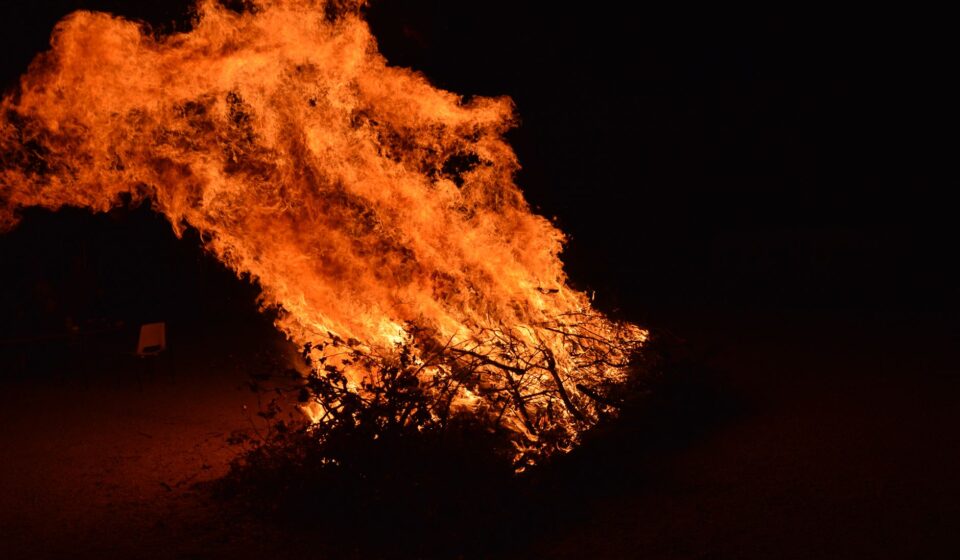
The ancient Celts believed that on the eve of their New Year, the veil between the living and the dead thinned. This allowed spirits to roam the Earth. To commemorate Samhain, Druids, who were Celtic priests, built enormous sacred bonfires. Communities would gather to burn crops and animals as sacrifices to the Celtic deities.
During the festivities, people wore costumes, typically consisting of animal heads and skins. They would don these to ward off or disguise themselves from the roaming spirits. This practice is a direct precursor to our modern Halloween costumes. The bonfire’s purpose was twofold: thonorr the deities and to light the way for the spirits returning to the spirit world after Samhain. This ancient ritual laid the groundwork for many of the symbolic elements we associate with Halloween today.
Roman and Christian Echoes in Halloween
After the Romans conquered about two-thirds of the Celtic territory by 43 A.D., they combined two of their own festivals with the traditional Celtic celebration of Samhain over the course of their 400-year rule. The first was Feralia, a day in late October when the Romans traditionally commemorated the passing of the dead. The second was a day to honor Pomona, the Roman goddess of fruit and trees. Her symbol is the apple, and the inclusion of this festival may explain the tradition of bobbing for apples, a popular Halloween game that has its roots in this ancient merging of customs.
Later, in the 9th century, the influence of Christianity spread into Celtic lands. Pope Boniface IV designated May 13th as All Saints’ Day, a day to honor saints and martyrs. This was later moved by Pope Gregory III to 1 November, encompassing the traditional date of Samhain. Some historians believe this was an attempt by the church to replace or subsume the pagan festival with a related, but church-sanctioned holiday. The celebration was also called All-hallows or Allhallows (from Middle English Alholowmesse meaning All Saints’ Day), and the night before it, the traditional night of Samhain, began to be called All-Hallows’ Eve, and eventually, Halloween.
From a different angle, the Christianization of pagan festivals is a common historical pattern. Many holidays that are now secular or have distinct modern meanings carry echoes of older religious or cultural practices. For instance, the widespread observance of All Saints’ Day on November 1st, a solemn occasion, might have inadvertently provided a more structured, less chaotic counterpoint to the wilder pagan observances it sought to replace. This demonstrates how evolving societal and religious landscapes shape the traditions we inherit.
The Story Behind the Jack-o’-Lantern
The iconic jack-o’-lantern, a carved pumpkin glowing with an inner light, has a fascinating origin story tied to Irish folklore. The legend tells of a man named Stingy Jack, who was known for his mischievous and often cruel nature. He famously tricked the Devil on multiple occasions, preventing his soul from going to hell.
When Jack died, however, he was neither welcomed into heaven nor hell. The Devil, true to his word, did not claim Jack’s soul, but he did send him wandering the Earth for eternity. As a parting gift, the Devil gave Jack a single burning coal to light his way, which Jack placed inside a carved-out turnip. Thus, he became known as Jack of the Lantern, or Jack O’Lantern.
Irish immigrants brought this legend to America. Finding turnips scarce but pumpkins abundant, they adapted the tradition to carving pumpkins. This evolution from carved turnips to pumpkins is a prime example of how traditions adapt to new environments and resources, becoming the globally recognized symbol of Halloween we know today.
Masks, Masquerades, and Modern Costumes
The practice of wearing costumes on Halloween dates back to the ancient Celtic festival of Samhain. As mentioned, Celts wore animal heads and skins to disguise themselves from malevolent spirits they believed roamed the Earth on that night. This was an act of protection, a way to blend in with the supernatural crowd.
As Christianity spread, so did variations of this tradition. In medieval Europe, it was common for people to wear costumes and masks on All Saints’ Day and All Souls’ Day. These were known as ‘souling’ and ‘mumming’. ‘Souling’ involved the poor going door-to-door offering prayers for the dead in exchange for soul cakes. ‘Mumming’ involved dressing up in costumes and performing for others, often in exchange for food or drink.
What this means in practice is that the desire to transform oneself, to adopt a different persona, or to ward off perceived threats through disguise is a deeply ingrained human behavior that has found a consistent outlet in Halloween. The shift from practical disguise for spiritual protection to playful masquerade for entertainment reflects the holiday’s broader evolution away from its darker, more superstitious roots.
From ‘Souling’ to ‘Trick-or-Treating’
The modern tradition of trick-or-treating has its direct ancestors in medieval European practices, particularly ‘souling’ and ‘mumming’. In the souling tradition, people, often the poor and children, would go from house to house on All Souls’ Day (2 November) offering prayers for the dead in return for ‘soul cakes’ – small cakes made with currants and spices. It was essentially an exchange of prayers for food.
In the early 20th century, especially in America, the practice evolved. Pranksters would often cause mischief on Halloween, leading communities to encourage a more organized, supervised form of the tradition. The idea was to channel the playful anarchy into a structured activity. By the 1930s and 1940s, the term ‘trick-or-treat’ became popular, and the practice became a mainstream way for children to collect candy, transforming it from a plea for sustenance or an act of appeasement to spirits into a communal, child-centric celebration.
A significant drawback of this evolution is the commercialization of the holiday. While trick-or-treating is a joy for many children, the sheer volume of commercially produced candy distributed can raise concerns about waste and health. According to some estimates, the amount of candy distributed globally on Halloween can be substantial, though precise figures for 2026 are still being compiled and vary widely by region.
Common Mistakes When Understanding Halloween’s Origins
One common mistake is believing Halloween is solely a modern, commercial invention. While commercialization has certainly amplified its reach, its origins are ancient and deeply tied to human needs for marking seasons, honoring the dead, and confronting fears. Another error is oversimplifying its history, often attributing it to just one source like Samhain without acknowledging the significant Roman and Christian influences that helped shape it into its current form.
A further pitfall is assuming the holiday has always been about playful scares. While modern Halloween is largely about fun, its historical roots involved genuine fear of the supernatural and appeasing spirits. Understanding the context of past societies, where death and the afterlife were perceived very differently, is crucial. For example, mistaking the ancient practice of warding off spirits for mere costume play misses the critical element of survival and spiritual belief that underpinned it.
Tips for a Historically Informed Halloween Celebration
To celebrate Halloween with a deeper appreciation for its origins, consider incorporating elements that honour its history. Instead of just candy, offer small, historically inspired treats like spiced apples or baked goods. When carving pumpkins, research traditional jack-o’-lantern designs or even try carving turnips for a truly authentic, albeit challenging, experience.
Organize a storytelling session about local folklore or ghost stories, connecting to the ancient tradition of Samhain. You could also explore the history of costumes by researching different historical periods or mythological figures. For those interested in the harvest aspect, consider a potluck featuring seasonal, harvest-themed foods. This approach can make Halloween a more meaningful and educational experience for all ages, moving beyond superficial spookiness to genuine historical engagement.
Frequently Asked Questions
What is the oldest tradition associated with Halloween?
The oldest tradition is the observance of Samhain by the ancient Celts, which involved lighting bonfires and wearing disguises to ward off spirits during the transition from summer to winter. This festival dates back over 2,000 years.
When did Halloween become a mainstream holiday?
Halloween’s popularity surged in America in the early 20th century, with widespread trick-or-treating and parties becoming common by the mid-1900s. Commercialization in the late 20th century further cemented its status globally.
Did Halloween originate from a specific religion?
Halloween’s origins are complex, stemming from the pagan Celtic festival of Samhain. It later saw influences from Roman traditions and was eventually overlaid with Christian observances like All Saints’ Day and All Souls’ Day.
Why are pumpkins associated with Halloween?
Pumpkins became associated with Halloween due to Irish folklore about Stingy Jack. Immigrants in America found pumpkins readily available and adapted the tradition of carving turnips into jack-o’-lanterns using pumpkins.
What was the purpose of ancient Halloween costumes?
Ancient Celtic costumes, often made from animal skins and heads, were worn to disguise individuals from evil spirits believed to be roaming the Earth during the Samhain festival.
How did trick-or-treating evolve?
Trick-or-treating evolved from medieval ‘souling’ and ‘mumming’ traditions, where people performed acts or offered prayers in exchange for food. In the 20th century, it transformed into a community-organized activity for children to collect sweets.
Last reviewed: July 2026. Information current as of publication; pricing and product details may change.
Related read: The Evolving Wonders: Fantasy Creatures in Literature Through the Ages