
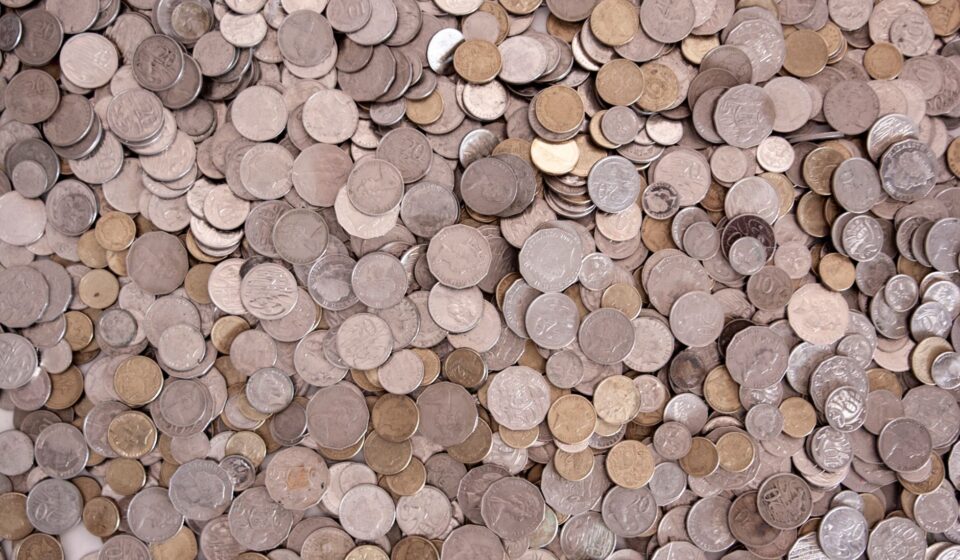
As of May 2026, teňňe coins remain an active and essential component of Turkmenistan’s currency system, facilitating everyday small-value transactions across the nation.
Last updated: July 28, 2026
A Journey Through Time: The History of the Teňňe
The narrative of the teňňe is intrinsically linked to Turkmenistan’s journey in establishing its own economic identity. Following the dissolution of the Soviet Union, Turkmenistan initially utilized the Russian ruble. The nation introduced its first national currency, the Turkmen manat, on November 1, 1993. This transition occurred at an exchange rate of 1 manat to 500 rubles.
At this pivotal moment, the teňňe was established as the subunit of the new manat. One hundred teňňe comprised a single manat. This introduction of the manat and teňňe marked a significant stride in asserting Turkmenistan’s independent economic sovereignty. It signified a definitive break from the Soviet monetary framework and the commencement of a new national financial infrastructure.
The adoption of a decimal system, featuring a subunit, is a common global practice. This provided a practical and standardized structure for the newly formed currency, aligning Turkmenistan with international monetary norms.
However, Turkmenistan’s currency has not remained static. The nation experienced a substantial redenomination of the manat in 2009. This reform saw the old manat (TMM) replaced by a new manat (TMT) at a formidable rate of 5,000 old manat to 1 new manat. This measure was largely implemented to simplify the currency system and to combat significant hyperinflationary pressures that had affected the economy in the years prior.
Crucially, the teňňe retained its position as the subunit throughout this redenomination. One hundred teňňe continued to be equivalent to 1 TMT. The 2009 redenomination represented a major economic undertaking for Turkmenistan, reflecting concerted government efforts to stabilize the currency and modernize its financial apparatus. The reform aimed to streamline transactions and establish a more realistic economic valuation after a period marked by high inflation.
The teňňe, as the smallest denomination, was integral to this broader monetary overhaul. It ensured that even the most minor transactions could be accurately accounted for within the revised monetary framework.
Teňňe Coin Denominations and Design in 2026
As of May 2026, a range of teňňe coin denominations are actively circulating within Turkmenistan. These coins are indispensable for facilitating low-value, everyday purchases. The most commonly encountered denominations for daily commerce include coins valued at 10, 20, and 50 teňňe. While older or less common denominations might occasionally surface, these three represent the core of current circulation for everyday needs.
The design of these coins transcends mere functionality; they serve as miniature canvases for national symbolism. Turkmen coins frequently feature imagery that reflects the nation’s profound cultural heritage, its significant historical achievements, and its unique natural landscapes. This imagery can encompass depictions of revered historical figures, national emblems such as the distinctive patterns of Turkmen carpets (known as guls), or iconic landmarks like the Arch of Neutrality or the dramatic Darvaza gas crater, famously dubbed the ‘Door to Hell’.
For example, the 50 teňňe coin often displays elements that highlight Turkmen artistry and evoke national pride. These coins are minted from robust metals selected for their durability and resistance to the wear and tear of constant circulation, ensuring their longevity. The specific designs are subject to periodic updates, reflecting shifts in national symbolism or commemorating significant national events. This makes the coins tangible artifacts of Turkmenistan’s evolving national identity.
The selection of materials for minting these coins is a critical practical consideration. Typically, they are produced from durable alloys such as brass, cupronickel, or stainless steel. These materials are chosen for their cost-effectiveness, inherent durability, and resistance to corrosion. Such alloys also allow for the intricate details of national symbols to be precisely impressed onto the coin’s surface, ensuring clarity and recognizability.
The Combination: Teňňe’s Role Alongside the Manat
In practical terms, the teňňe and the manat function synergistically to constitute Turkmenistan’s complete monetary system. The manat serves as the primary unit of currency, employed for substantial purchases, salary disbursements, and, albeit often under strict regulation, international transactions. The teňňe, as its designated subdivision, effectively manages the smaller, day-to-day financial interactions that are the lifeblood of commerce.
Consider a typical scenario: purchasing a loaf of bread or a small bunch of local herbs at a bustling market. Such items are commonly priced in a combination of manat and teňňe, perhaps stated as 1 manat and 20 teňňe. In this instance, payment would likely involve a mix of manat banknotes and teňňe coins. If the price were exceptionally low, payment might consist solely of teňňe coins.
This clear division is fundamental for efficient and precise commerce, enabling detailed pricing and straightforward payment processes. The relationship between the two units is hierarchical in terms of value. The manat possesses significant purchasing power, while the teňňe represents fractional amounts of that power. This structure is prevalent in numerous currency systems globally, offering a granular framework for economic exchange.
Consequently, the stability and perceived value of the teňňe are directly influenced by the overall economic health and monetary policies governing the Turkmen manat. From another perspective, the very existence of the teňňe influences the perception of value in pricing. When a price is listed as, for example, 0.50 TMT, it is universally understood to equate to 50 teňňe.
This fractional system permits a broader spectrum of price points and renders very small transactions feasible. It eliminates the need for bartering or navigating overly complex exchange rate calculations. The teňňe is thus a foundational element underpinning Turkmenistan’s daily financial operations.
Teňňe in the Modern Economy: A 2026 Perspective
As of May 2026, the teňňe continues to play an indispensable role in Turkmenistan’s economy, particularly within the retail sector. Despite the nation navigating various economic challenges, including currency value fluctuations and government-led anti-inflationary measures, the teňňe coins persist as the smallest denomination of legal tender used in everyday life. Small businesses, market vendors, and the general populace all depend on teňňe coins for making change and for the purchase of low-cost goods.
The widespread circulation of teňňe coins offers a direct reflection of the prevailing monetary policies and economic conditions within Turkmenistan. Theoretically, a scenario of high inflation could lead to the teňňe becoming so devalued as to be practically useless. This could prompt a future redenomination or the discontinuation of smaller denominations, a pattern observed in some other countries’ monetary histories. However, based on available reports as of July 2026, the teňňe coins actively maintain their crucial function in facilitating commerce.
International financial institutions and economic analysts monitor Turkmenistan’s currency situation closely. For instance, the International Monetary Fund (IMF) periodically assesses the economic stability and monetary policies of member nations. Reports from the IMF and regional economic bodies often provide insights into the factors influencing currency value and circulation, including the role of subunits like the teňňe. As of early 2026, analyses suggest that while Turkmenistan’s economy is diversifying, its reliance on commodity exports continues to shape its monetary landscape. The teňňe’s stability is thus linked to broader economic trends.
Recent observations from the ground indicate that cash transactions, particularly involving teňňe coins, remain prevalent in Turkmenistan’s markets and smaller retail outlets. This preference for physical currency, despite global trends toward digital payments, highlights the ongoing importance of the teňňe in the daily economic lives of Turkmen citizens. Efforts by the Central Bank of Turkmenistan to maintain the manat’s stability indirectly support the teňňe’s functional value.
Circulation and Availability Challenges
Ensuring a consistent and sufficient supply of teňňe coins for circulation is a key responsibility of the Central Bank of Turkmenistan. This involves managing minting operations and distribution networks across the country. While generally available, periodic shortages or imbalances can occur, particularly in more remote regions or during periods of heightened economic activity.
Reports from local news outlets in late 2025 and early 2026 indicated occasional difficulties in obtaining sufficient change in teňňe denominations in certain urban centers. This can sometimes be attributed to hoarding by businesses seeking to provide change or to logistical challenges in distribution. Such issues, though usually temporary, can cause minor inconveniences for consumers and vendors alike.
The design and security features of teňňe coins are also periodically reviewed and updated to prevent counterfeiting and to maintain public trust. The Central Bank works with international partners to adopt best practices in coin production and security, ensuring the integrity of the national currency. Independent analyses of coin quality, as reported by numismatic societies, generally affirm the durability and clear design standards of current Turkmen teňňe issues.
The Teňňe in the Context of Global Currency Trends
Globally, the role of physical currency, including smaller denominations, is evolving. Many countries are seeing a decline in cash usage due to the rise of digital payments, mobile banking, and contactless technologies. However, cash, and by extension subunits like the teňňe, often remain vital in specific contexts. These include lower-income populations, rural areas, and for small, informal transactions where digital infrastructure may be less developed or trusted.
Turkmenistan’s continued reliance on teňňe coins reflects these global nuances. While the government has explored digitalization initiatives, the practicalities of widespread adoption mean that physical currency, including the teňňe, retains its importance. The Central Bank of Turkmenistan monitors these global trends, balancing the push for modernization with the need to maintain an inclusive financial system that serves all segments of the population.
The durability and design of the teňňe coins are important factors. As of July 2026, the coins in circulation are generally well-maintained, with designs clearly visible. Numismatic experts occasionally comment on the aesthetic and historical value of Turkmen coinage, noting how the designs encapsulate national narratives. This adds a layer of cultural significance beyond their purely economic function.
Frequently Asked Questions
What is the smallest denomination of Turkmen currency?
The smallest denomination of Turkmen currency is the teňňe. One hundred teňňe equals one Turkmen manat (TMT). Coins in denominations of 10, 20, and 50 teňňe are commonly used for small transactions as of July 2026.
Are teňňe coins still in circulation in Turkmenistan?
Yes, teňňe coins are very much in active circulation as of May 2026. They are essential for everyday purchases, providing change, and facilitating transactions in markets and retail settings across the country.
What images are typically found on Turkmen teňňe coins?
Turkmen teňňe coins often feature national symbols, historical figures, traditional Turkmen carpet patterns (guls), and iconic national landmarks. These designs serve to represent the country’s rich cultural heritage and identity.
Has the value of the teňňe changed significantly recently?
The value of the teňňe is directly tied to the Turkmen manat. While the manat has experienced fluctuations, the 2009 redenomination established the 100 teňňe to 1 TMT ratio, which remains fixed. Significant changes in the teňňe’s purchasing power are generally linked to broader inflation trends affecting the manat.
Can tourists use teňňe coins in Turkmenistan?
Tourists will encounter and use teňňe coins for small purchases, such as in markets or for public transport. It is advisable to carry a mix of manat banknotes and teňňe coins for convenience, as exact change is often expected.
Conclusion
In summary, the teňňe remains a vital component of Turkmenistan’s monetary system in 2026. Far from being obsolete, these coins are indispensable for the smooth functioning of daily commerce, bridging the gap between larger manat-denominated transactions and the smallest everyday purchases. Their designs serve as miniature cultural ambassadors, reflecting national pride and heritage. While global trends lean towards digitalization, the teňňe’s continued circulation underscores its practical importance in Turkmenistan’s current economic landscape, ensuring that financial exchange remains accessible and granular for all citizens.